
IFM2021 Photo Album Day 01

IFM2021 Photo Album Day 02


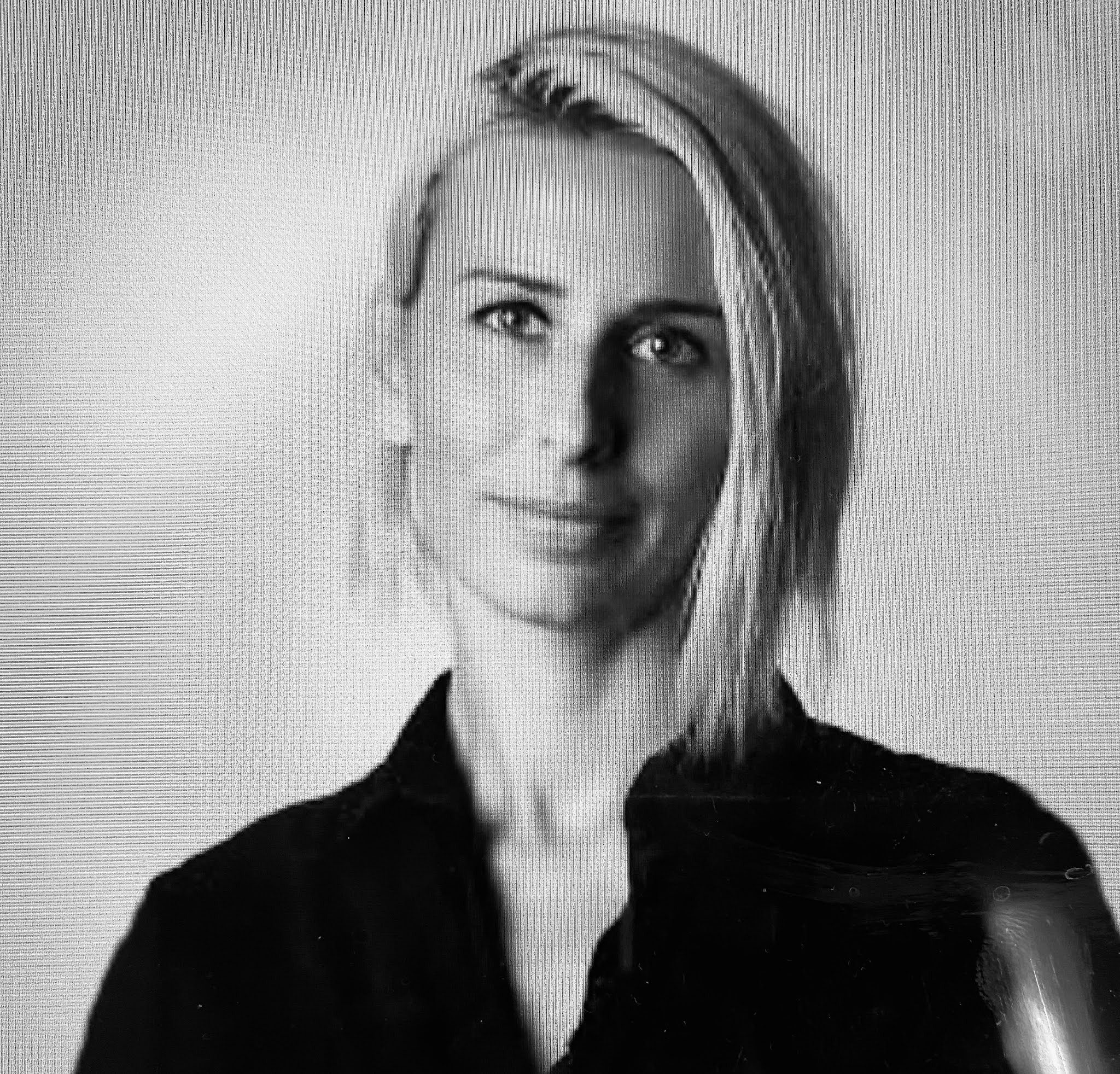
Title: Origins of the 21st Century: The Impact of Digital Technology on the Construction of the Cinematic Essay.
Presenter: James Slaymaker
Bio: James Slaymaker is a PhD Student in Film Studies at the University of Southampton, fully funded by a presidential scholarship. His research topics include the cinematic essay, digital technology and contemporary European cinema. His work has been published in the journals Senses of Cinema, Bright Lights Film Journal, Film International, as well as the essay collection ReFocus: The Films of Paul Schrader (Edinburgh University Press). His first book Time is Luck: The Cinema of Michael Mann is currently in development with Telos Publishing. As a filmmaker, his work has been screened at the London DIY Film Festival, the Concrete Dream Film Festival, the InShort Film Festival and The Straight Jacket Film Festival.
Presenter: Lena A. Hübner
Registration Number: 027
Institution: Université du Québec à Montréal, Canada
Abstract: In the aftermath of the death of George Floyd, Montrealers took to the streets to fight racism. While hashtags such as #blacklivesmatters and #LaVieDesNoirsCompte went viral, raising awareness about different types of discrimination racialized citizens face in Quebec, the CAQ government refused to acknowledge the existence of systemic racism in the province. Scholars have studied the role online media interactivities play for human rights activists (Pilote & Hübner 2019) and for those who disseminate misinformation about such movements (Gimenez & Voirol 2017). Yet, little attention is paid to the publics these online campaigns are trying to reach, namely those who feel indifferent about the consequences of said political stances. As part of my PhD thesis, this paper explores how white francophone members of Quebec’s working-class who claim to disregard politics come into contact with social and political issues, such as immigration or poverty, in everyday life. I explore if and how the increased fragmentation of public discourse via social media shapes their (a)political stances in order to determine to what extent digital media usage reconfigures their relationship with politics throughout their lives. An intersectional narrative approach (Collins & Bilge 2020, Crenshaw, 1991) to whiteness (McMullan 2005; Du Bois 1922) combining three rounds of in-depth life-story interviews (n=8) (Chadwick 2017) and a one-year ethnographic observation of the interviewees’ social media accounts (Hine 2005) allowed me to analyze class, racial, nation, and gender dynamics via their “mediated everyday political experiences.” The gathered narratives show that participants avoid talking about politics in public settings, including online. Yet, they will discuss issues they care about, such as poverty, in more private settings (Eliasoph 1998). I have found that the way they talk about these issues reveals racist, gendered, classist, and anti-immigrant biases that sometimes draw from particular social media scripts associated with specific media outlets and political perspectives. The sites they access on social media tend to support a white francophone notion of Quebec’s political history, reinforcing key mechanisms of social division. Yet, all informants are aware of these pitfalls and try to prioritize “more reliable” news channels. Apparently, awareness of needing to diversify one’s media sources is not enough to arm white people against adopting discriminatory ideologies. However, analysis of follow-up interviews conducted shortly after the COVID-19 outbreak indicates that increased exposure to polarized messages and misinformation about the pandemic led participants to quit social media—at least temporarily—despite the fact that a majority of social, political, educational, and professional relations were transferred into the virtual realm. The same participants who occasionally interacted with posts that reinforce social division mechanisms now claim they can’t cope with it anymore. The prioritization of less interactive news channels thus becomes a leitmotiv as the feeling of being unable to contribute to social change settles in.

Presenter: Anna Gedal
Registration Number: 062
Institution: The New School, New York, USA
Abstract: Today, immersive technologies—like virtual reality—are celebrated as empathy machines, capable of fostering meaningful cross-cultural understanding. My MA thesis project interrogates this assumption. I analyze two early 20th-century case studies of immersive rides: A Trip to the Moon (1901), from the 1901 Buffalo World’s Fair, and 20,000 Leagues Under the Sea (1903), from Coney Island’s Luna Park. The rides complemented the ethnographic villages surrounding them. The villages allowed visitors to experience a speculative past and present. Taking on the role of anthropologists, they plotted a global racial hierarchy. The immersive rides, however, offered them a glimpse of the electrified future promised by American imperialism. Through the rides, the visitors embodied the role of colonizer, “discovering” new frontiers. Though perhaps experienced simply as entertainment, the rides were consciously designed as a powerful pedagogical and epistemological tool for cultural knowledge sharing that transmitted the imperial imaginary through a collective, multi-mediated performance. The impact was profound, garnering mass public support for American racial segregation, immigration restrictions, and imperialism. Drawing lessons from my case studies, I argue that the early rides were precursors to 21st-century immersive environments, thus it is imperative to critique the medium or risk reinscribing the imperial gaze into contemporary experiences. And the examples of this are endless. This project centers on the pressing need to reconnect immersive tech to its historical context to more fully understand both the medium’s possibilities and limitations. To move toward this goal, I offer fellow cultural producers, curators, strategists, technologists, and designers the beginnings of a shared language to highlight the medium’s fraught legacies and a path toward a more equitable cultural production process.


Bio: Kalli Paakspuu was awarded a doctorate from the University of Toronto for her research on early indigenous use of photography in international relations. She has published widely on film and media and teaches in the animation and design programme at Sheridan College in Oakville, Canada. Her dramatic and documentary films have toured internationally. Currently she is completing the biography music documentary, Maestro Roman Toi Beautiful Songs I Dedicate to You and developing a documentary about choral music as healing therapy.
Presenters: Christian Iseli (PI); Miriam Laura Loertscher, Thomas Gerber, Valentin Huber, Michael Schaerer
Registration Number: 070
Institutions: Zurich University of the Arts and University of Bern, Switzerland
Abstract: Due to the rapid pace of the digitalization process, virtual production in film is gaining importance. This paper focuses on an interdisciplinary research project that investigates the effects of virtual production on visual aesthetics, on the changing workflows of filmmakers and actors, and on the perception of a cinema audience. In order to systematically compare conventional filmmaking with new virtual forms of production, two short feature films were shot both conventionally (in real locations) and virtually (in the digitally scanned versions of these locations). The filmmakers aspired to keep all parameters of the production the same so that wherever possible, the only differences would be in terms of spatial representation. The process of virtual production included shooting with green-screen and pre-visualization on the basis of real-time image rendering in moderate quality. The high-resolution variants, however, were still processed in post-production. Theoretical concepts from film and media studies served as an orientational background for this project, while the methodology comprised a combination of qualitative, practice-based research and quantitative methods, in the tradition of mixed methods. The following results are discussed from the perspective of the qualitative, practice-based approach: – In terms of visual aesthetics, the two film variants were hardly distinguishable. Digital artificiality due to visible compositing artifacts in the those with virtual backgrounds could only be determined in specific shooting situations. Furthermore, they were dependent on the resources that could be invested into post-production. – Due to the technical effort, the virtual production processes showed a strongly increased complexity of the workflows. Shooting in the studio was therefore much more labor-intensive. – For the actors, the virtual production process resulted in a high degree of abstraction of their working methods. In the green-screen studio, the spaces could only be experienced via monitors or, at best, with virtual reality goggles. The lack of immediacy in the experience required a high degree of additional concentration. Preliminary results of the quantitative audience study are also included: – The subjects, who neither knew the context nor the actual focus of the comparative study, did not realize that the backgrounds in one film variant were virtually simulated. To some degree, however, they were aware of the different image qualities of the variants. As virtual production continues to develop, green screens are being replaced by large arrays of LED displays, as in, for example, The Mandalorian (Lucasfilm & Fairview Entertainment, 2019). The present study shows that in the first phase of virtual production, in which green-screen procedures are still predominant, composition artifacts occur mainly in the context of moderate production resources and are still measurable in terms of image quality.

Presenter: Irina Lyubchenko
Registration Number: 051
Institution: Independent Scholar, Toronto, Canada
Abstract: Authenticity of a work of art has always been a major concern for art dealers, collectors, museums, and art historical scholarship. Historically, authentication involved art experts, such as art historians, scholars, museum curators, and art dealers, to attribute a work of art to a particular artist, culture, or era. Despite common assumptions among the members of the public, attribution is rarely based on scientific tests of works of art and mainly relies on connoisseurship, or “sensitivity of visual perception, historical training, technical awareness, and empirical experience needed by the expert to attribute the object.” This paper looks into the history of connoisseurship and attribution of artworks, focusing on the latest chapter of this development, the non-fungible tokens or NFTs. The latter fully replaced the need for expert advice and “sensitivity of visual perception” and substituted the often-contested author signature for the computed digital signature or token, authenticating a work of art. Crypto-art and crypto-collectibles have flooded digital markets, offering authentic and unique art. Recently, Beeple’s Everydays: The First 5000 Days, the first digital artwork fitted with a non-fungible token offered by the major auction house Christie’s, sold for $69,346,250 on March 11, 2021. It is the third most expensive artwork sold by a living artist, following Jeff Koon’s sculpture Rabbit (1986) and David Hockney’s painting Portrait of an Artist (Pool with Two Figures) (1972). While Jeff Koons and David Hockney are the artists, whose theoretical perspectives are well known and have a secured place in an art historical canon, Beeple’s work and that of other digital NFT artists has not been fully investigated to be positioned in relation to art history, seemingly existing in a theoretical vacuum. The absence of artistic statements that usually accompany artworks contributes to this effect. Is it possible to think of the 21st century NFT-backed digital artists as the avant-gardes, who, like their 20th - century predecessors, confronted and condemned the art historical tradition? This paper claims that the transformation of the attribution process from that which relies on connoisseurship to the one dependent on computation alone may shed light on this question. Using historical and textual analyses, this essay provides a critical response to the recent artworld trends driven by the decentralized networks and currencies existing in fully digital ecosystems.

Bio: Irina Lyubchenko holds a PhD in Communication and Culture, an MFA in Visual Arts, a Bachelor of Technological Education, and an Honors BFA in Photography Studies. Her research investigates intersections between theories of historical avant-garde and digital culture. She is an educator, a researcher, and a practicing artist, who creates and theorizes digital media experiences. Throughout her career as a media artist, Lyubchenko worked with a range of creative tools, analog and digital. Currently, she investigates creative potentials of Virtual Reality and game development, using Unity and Oculus VR system. She is on her way to receive certification in Game Development from George Brown College. Lyubchenko is an avid proponent of experiential learning, which she practices daily in her own work and her classrooms.
Presenter: Michael Keerdo-Dawson
Registration Number: 010
Institution: Tallinn University, Estonia
Abstract: As part of my PhD, I am conducting artistic research into interactivity and filmmaking and reflecting on how interactivity opens possibilities and restrictions for the creative process. This paper will examine how interactivity and film dramaturgy complexify the meaning-making process. Playwriting guides, creative writing handbooks, and screenwriting manuals are replete with guidance on how writers should express their themes, as a reoccurring idea that underwrites the entire story through what the characters learn or how they change, proving their position on an issue, etc. But the majority agree that the theme is most clearly expressed at the climax of the story. The climax is where theme, character, and the narrative’s result often converge in the terminal of dramatic meaning-making; if the theme is established and elaborated on during a film, then its climax is where the film’s author expresses their position on the matter through the narrative’s result or a lack thereof. As part of my PhD artistic research, I have written and directed an interactive film, The Limits of Consent (orig. Nõusoleku piiril). The film follows a tree structure where the narrative splinters at the end of the second act and presents four nodes with two options, and thus five separate climaxes for the film. Each climax is significantly different in its character focus, action, tone, and, crucially, its expression of the film’s themes. The meaning that a film expresses may be transmitted in concert but received differently, the author of a story affects the perception of their audience through a communicative act that is narrative; this effect might be exactly what was intended, or it might fail completely, or it might land somewhere in the middle. There is, however, an entirely new dimension to a film being potentially taken to different thematic statements during different viewing experiences depending on whether one or more of the film’s climaxes are explored, effectively offering a more explicit opportunity for the co-construction of meaning. The Limits of Consent has many themes, but as the film’s title makes explicit, the grey zone of sexual consensual practice is one of those themes. The selection the viewer makes at the nodal junctions effectively change the film’s thesis on this issue (e.g., the consequence of a consensual violation can be overcome or forgotten; the consequences cannot be overcome and continue as maladaptive schemas, etc.). The nodes present clues as to what the character will do next if one or another branch of the story is selected, allowing, within limits, for the thematic expression to be chosen and meaning-making to be diversified beyond ambiguity or interpretive possibility by adding interactivity. In this paper, by examining how the thematic portfolio of The Limits of Consent was established and then elaborated on in different ways depending on the selected ending, I will explore the implications of this difference between a traditional film and an interactive film.

Presenter: Susan Cardillo
Registration Number: 001
Institution: University of Hartford, Connecticut, USA
Abstract: Campus Reboot is a crowd-sourced, interactive and collaborative web-based documentary project and course. The project will be a living document of the historical times of college during the Covid19 pandemic and its aftermath. Working with 15 colleges around the world, students created videos, based on prompts, to share their feelings about college during Covid. Campus Reboot allows students to not only create works that speak to the voice of their generation, in the midst of a historical pandemic, but it also allows students to work with the footage from other schools, around the world, to create a broader story of our times. According to Nichols (2001), documentary projects are about telling stories concerning our shared world and how we want it to be. This generation grew in participatory art, video and community to begin the discovery that documentary could be about making purposeful stories with people rather than just about them (Rose, n.d.). This project uses crowd-sourced documentary to tell important stories and create a rich learning environment. Collaborative, crowd-sourced and interactive sites are all examples of Participatory Media. Participatory sites such as Youtube have changed the landscape of digital video storytelling. It can also be argued that social media sites are the new breeding ground for both collaborative and crowd-sourced video work. Campus Reboot uses Youtube as a cloud-based participatory site for video uploads and currently Wix as its cloud-based website placeholder and Klynt interactive software to create the home base. Collaborative documentary allows the scope of the documentary to expand with the addition of user-generated content. User-generated content can be remixed, reworked, and built upon to enrich the story (Bhimani, 2012). According to the MIT Open Documentary Lab, collaborative or co-created documentaries interpret the world, and seek to change it, through a lens of equity and justice (Clark & Cizek, 2019). Enabling students to learn and create in this international environment affords them new ways to interpret, understand and engage in the world through the experiences and insights of their peers. With interactive documentary the viewer is invited to become a creative partner in the story. It also enables a global access at any time through many entrances, including social networks (Uricchio, 2019). All of these documentary styles come together in unison to help both students and instructors work in new and collaborative ways to tell important stories in Campus Reboot.

Bio: Dr. Susan Cardillo has a Doctorate of Computer Science in Emerging Media concentrating on Interactive Documentary (digital storytelling) for Social Change. She is currently an Assistant Professor of Digital Media and Journalism at the University of Hartford. Dr. Cardillo was recently awarded the Innovations in Teaching award, as well as the Women’s Initiative Fellowship at the University of Hartford. Her area of research is Interactive and Micro-Documentary for Social Awareness and Change. Campus Reboot is her latest work, in progress.

