Showing posts with label article review. Show all posts

No History without Accessibility

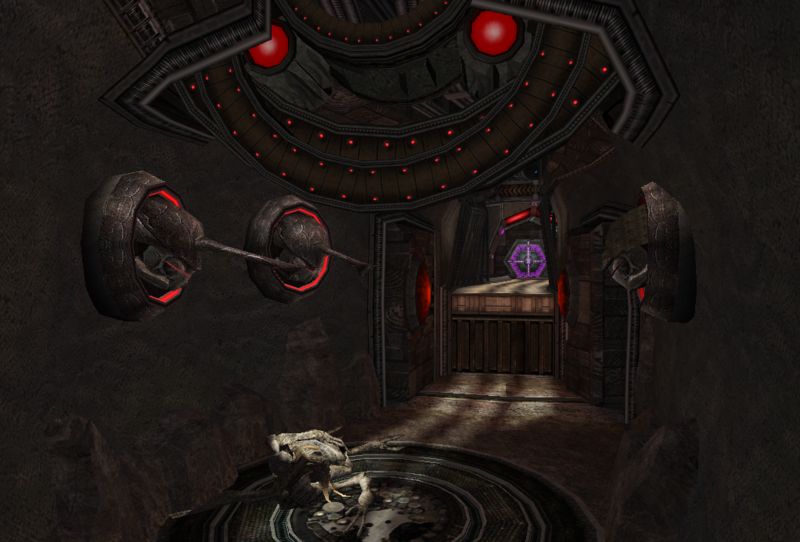
"Path of Honor" (screenshot)

Review by Kerry Wall

In his article “An ‘Alternative to the Pen’? Perspectives for the Design of Historiographical Videogames”, which appeared in the September 2022 issue of the journal Games and Culture, game-studies scholar Julien A. Bazile explores the extent to which videogames can be used to present scholarly historical arguments. Bazile differentiates between what he calls “historical videogames” that are merely set in the past and “history games” that are either developed by or under the supervision of historians or are otherwise “designed with the purpose of making a historical argument.” (857) The article argues neither for nor against adopting this approach, instead summarizing potential benefits and drawbacks as well as identifying potential lessons from the development of the history game Path of Honor. 

Bazile contrasts the development process of a history game against that of a historical game, noting that historians have served as consultants to major game-development companies on historical games but that their contributions may only be reflected superficially in the final product. A historian’s role in a history videogame, however, is one of “historian-designer” or “historian-developer”; while not necessarily the final decision maker on all technical matters, the historian becomes more of a project leader. Bazile concludes by stating that whether videogames are a useful method of presenting an academic argument is left to the individual historian, but that if the idea of a history videogame becomes a catalyst for new possibilities within traditional delivery methods, he considers the idea a success. 

Bazile’s introduction states that the article does not advocate for replacing traditional delivery methods with videogames; he discusses possible issues with using games to advance academic arguments. His exploration of potential difficulties with peer reviews raises interesting questions about how such a process would unfold and whether a universal standard could be established. For example, he notes that playing the completed game may enable peer reviewers to assess the intended final experience but that such a process could be lengthy if a game has multiple win-and-loss states or if an otherwise qualified subject-matter expert is less familiar with videogame mechanics. Reviewing the raw code or source materials may provide a more rounded view of the argument and the search materials but fails to replicate the experience of playing the game, which is the intended end state for the user. This was a well-organized accounting of possible friction between this proposed delivery method and established academic standards. 

The article is at its most thought-provoking when he Bazile?? discusses the concept of “seamlessness,” noting “the hallmark of a good videogame design is its invisibility” (864). This can be difficult to reconcile with an academic argument, as the author's credentials and the research's suitability are factors in determining the study's strength. Bazile makes a convincing argument that a history video game cannot be as “immersive” as a historical (or other non-academic) videogame because such a game might be perceived as “unauthored” or indistinguishable from a game intended as fiction. While this observation is well taken, the article suffers in his resulting speculation about an established “aesthetic convention to express uncertainty, doubt, and nuance” (864). Such a system would help to fulfill academic needs by attempting to simulate nuance, but Bazile’s specific suggestion that such games make use of “word formatting (size, font, color, or transparency)” (866) to do this runs afoul of accepted accessibility practices. As users may have various forms of colour blindness, colour should not be used as the sole method of conveying information (Brown and Anderson 706). Players are now accustomed to increasing in-game text size as needed (Brown and Anderson 708), and such an accessibility feature may conflict with the text convention Bazile suggests. While his call for establishing visual convention is merited, the article would have benefitted from an acknowledgment that such a convention would need to be developed following the principles of accessible game design. 

“An ‘Alternative to the Pen’? Perspectives for the Design of Historiographical Videogames” achieves its goals of exposing the benefits and drawbacks of using video games as a conduit for academic arguments. Bazile's observations on the possible role of historian-developer and historian-designer may give academics much to consider when assessing how to present their research. His analysis of opportunities and challenges is generally even-handed and balanced. The lack of attention to videogame accessibility is an otherwise exciting exploration of this topic.   


Works Cited 
Bazile, Julien A. “An ‘Alternative to the Pen’? Perspectives for the Design of Historiographical Videogames.” Games and Culture, vol. 17, no. 6, 2022, pp. 855–870. 

Brown, Mark, and Sky LaRell Anderson. “Designing for Disability: Evaluating the State of Accessibility Design in Video Games.” Games and Culture, vol. 16, no. 6, 2020, pp. 702–718.
AI-Generated Art and Ownership

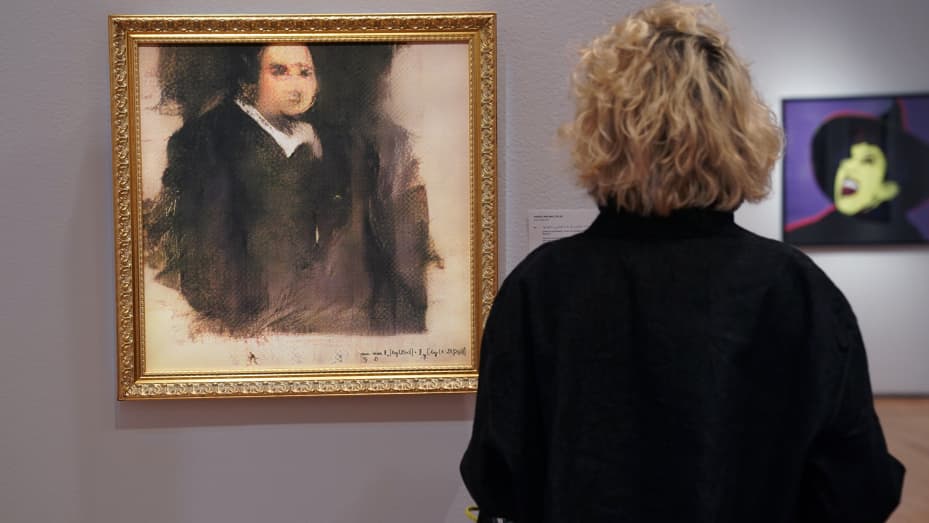
"Portrait of Edmond de Belamy" created by French AI engineers and artists called Obvious


Review by Marcus Vine

Society is always looking to increase efficiency above all else. Nowadays, it is rare for an individual to hone their craft to perfection, and with every technological advancement, there are fewer masters. Art is no exception to this rule. However, we walk a thin line when trying to bring autonomy to a skill with such a human element. 

In the article, “Who Gets Credit for AI-Generated Art?” written by Ziv Epstein et al., the authors state that we dangerously begin anthropomorphizing artificial intelligence, which affects how we trust the AI, as well as how we hold individuals accountable as a result of something created with AI (3). Because of this, we often overlook what role the AI plays in creating the art, whether it is used as a tool or an agent, how the AI is trained on the works of others, and most importantly, who should be credited for the generated artwork. 

The authors start their article with a summary of the painting Edmond de Belamy, a piece that was created by AI and then sold at Christie's Art Auction for over $400,000 (1). This sparked a wave of discussion about who takes credit for art created by machines, and it was concluded by Epstein et al. that agency was ultimately determined by how the AI was described (7). However, due to the specificity of the chosen case, many variables that influence modern-day generative AI were not present. 

One of these critical variables is how the “input,” as defined by Fjeld and Kortz, is handled. Images are sourced from all over the internet to train these machine learning algorithms, where those images have original authors already. As of the time of writing this paper, copyright and intellectual property law have not caught up to the rapid advancement of generative AI. And so, in practice, art created by text-to-image generative AI is often sold under the guise of being owned by the “prompt-engineer,” the individual that writes the text prompt. This again leads us to more questions about ownership. If an artist were to generate an image and then touch it up in photoshop, should ownership be shared between the artist and the AI? Or would the artist then take full ownership of the piece? “Stealing like an artist” is not a novel concept, as any new piece of art can be viewed already as a collection of pieces and inspirations that are then manifested together by the artist, and not often are artists' inspirations credited with any form of ownership. 

As AI becomes more prominent in the art space, there have been many mixed feelings about its use in modern media. However, according to Arbiza Goenaga, there is currently changing artists’ relationship with technology (Arbiza Goenaga 55). He furthers this sentiment by stating: 
“As maintained by researchers Glenn W. Smith and Frederic Fol Leymarie we can now begin to think of the machine, not as the artist’s subject matter or medium, but as creator or co-creator. With the current technological development, and with GAN especially, we can confidently begin to speak comfortably of the machine as an artist.” (Arbiza Goenaga 55) 
Perhaps soon, generative AI involved in a creative process will need to be given proper credit. More pressing is whether AI is to be considered legally as an entity of its own being or a creation of an individual (Fjeld and Kortz). 

I believe that all art generated solely through generative AI and machine learning should be legally considered under creative commons and cannot be sold by the individual who generated it using AI as a tool. AI is good for artists. It allows us to push concepts further and faster than before, increasing the overall quality of the art. 

Works Cited 

Epstein, Ziv, et al. “Who Gets Credit for AI-Generated Art?” IScience, vol. 23, no. 9, 25 Sept. 2020,  

Fjeld, Jessica, and Mason Kortz. “A Legal Anatomy of AI-Generated Art: Part I.” Harvard Journal of Law & Technology, Jolt Digest, 21 Nov. 2017.  

 Arbiza Goenaga, Mikel. “A Critique of Contemporary Artificial Intelligence Art: Who Is Edmond De Belamy?” AusArt, vol. 8, no. 1, 2020, pp. 51–66.