Showing posts with label Video Game. Show all posts

No History without Accessibility

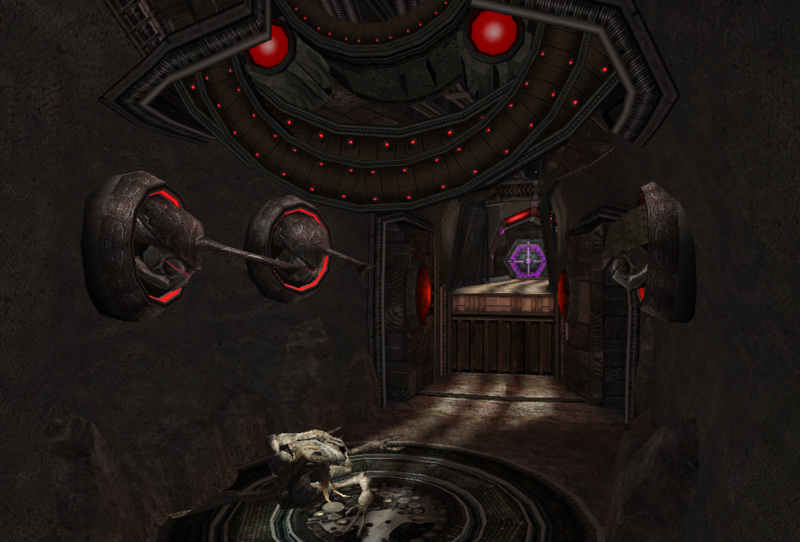
"Path of Honor" (screenshot)

Review by Kerry Wall

In his article “An ‘Alternative to the Pen’? Perspectives for the Design of Historiographical Videogames”, which appeared in the September 2022 issue of the journal Games and Culture, game-studies scholar Julien A. Bazile explores the extent to which videogames can be used to present scholarly historical arguments. Bazile differentiates between what he calls “historical videogames” that are merely set in the past and “history games” that are either developed by or under the supervision of historians or are otherwise “designed with the purpose of making a historical argument.” (857) The article argues neither for nor against adopting this approach, instead summarizing potential benefits and drawbacks as well as identifying potential lessons from the development of the history game Path of Honor. 

Bazile contrasts the development process of a history game against that of a historical game, noting that historians have served as consultants to major game-development companies on historical games but that their contributions may only be reflected superficially in the final product. A historian’s role in a history videogame, however, is one of “historian-designer” or “historian-developer”; while not necessarily the final decision maker on all technical matters, the historian becomes more of a project leader. Bazile concludes by stating that whether videogames are a useful method of presenting an academic argument is left to the individual historian, but that if the idea of a history videogame becomes a catalyst for new possibilities within traditional delivery methods, he considers the idea a success. 

Bazile’s introduction states that the article does not advocate for replacing traditional delivery methods with videogames; he discusses possible issues with using games to advance academic arguments. His exploration of potential difficulties with peer reviews raises interesting questions about how such a process would unfold and whether a universal standard could be established. For example, he notes that playing the completed game may enable peer reviewers to assess the intended final experience but that such a process could be lengthy if a game has multiple win-and-loss states or if an otherwise qualified subject-matter expert is less familiar with videogame mechanics. Reviewing the raw code or source materials may provide a more rounded view of the argument and the search materials but fails to replicate the experience of playing the game, which is the intended end state for the user. This was a well-organized accounting of possible friction between this proposed delivery method and established academic standards. 

The article is at its most thought-provoking when he Bazile?? discusses the concept of “seamlessness,” noting “the hallmark of a good videogame design is its invisibility” (864). This can be difficult to reconcile with an academic argument, as the author's credentials and the research's suitability are factors in determining the study's strength. Bazile makes a convincing argument that a history video game cannot be as “immersive” as a historical (or other non-academic) videogame because such a game might be perceived as “unauthored” or indistinguishable from a game intended as fiction. While this observation is well taken, the article suffers in his resulting speculation about an established “aesthetic convention to express uncertainty, doubt, and nuance” (864). Such a system would help to fulfill academic needs by attempting to simulate nuance, but Bazile’s specific suggestion that such games make use of “word formatting (size, font, color, or transparency)” (866) to do this runs afoul of accepted accessibility practices. As users may have various forms of colour blindness, colour should not be used as the sole method of conveying information (Brown and Anderson 706). Players are now accustomed to increasing in-game text size as needed (Brown and Anderson 708), and such an accessibility feature may conflict with the text convention Bazile suggests. While his call for establishing visual convention is merited, the article would have benefitted from an acknowledgment that such a convention would need to be developed following the principles of accessible game design. 

“An ‘Alternative to the Pen’? Perspectives for the Design of Historiographical Videogames” achieves its goals of exposing the benefits and drawbacks of using video games as a conduit for academic arguments. Bazile's observations on the possible role of historian-developer and historian-designer may give academics much to consider when assessing how to present their research. His analysis of opportunities and challenges is generally even-handed and balanced. The lack of attention to videogame accessibility is an otherwise exciting exploration of this topic.   


Works Cited 
Bazile, Julien A. “An ‘Alternative to the Pen’? Perspectives for the Design of Historiographical Videogames.” Games and Culture, vol. 17, no. 6, 2022, pp. 855–870. 

Brown, Mark, and Sky LaRell Anderson. “Designing for Disability: Evaluating the State of Accessibility Design in Video Games.” Games and Culture, vol. 16, no. 6, 2020, pp. 702–718.


Patient Zero, Parasite, Epidemic Agent: The Player’s Role in Watch Dogs Legion.


Presenters: Riccardo Retez and Luca Miranda
Registration Number: 028
Institution: IULM University, Milan, Italy
Abstract: This research investigates the figure of the player as a pathogen agent able to impose a propagating form of homologation within the video game Watch Dogs: Legion (Ubisoft 2020). The study involves the analysis of the role of the player in Watch Dogs: Legion, according to a multiple configuration: as patient zero, parasite, and epidemic agent. Therefore, the role of the player is potentially expressed through his being a starting point of contagion, a parasite that raids and bends the bodies of NPCs (non-player characters) and an epidemic agent—a potentially uncontrolled transmission medium. Rafizadeh, Manavirad and Liberati (2020) state that in video games, players are able to move and progress in the interactive world of the game while watching the avatar from an external point of view. The relation between virtual worlds and players can be highlighted as a form of social and political agency. As Daniel Muriel and Garry Crawford (2018) asserted, video games can provide perspectives on political actions, as well as on the hallmarks of the contemporary. By choosing a specific role, the player expresses political, social, and anthropological attitudes, useful to frame cultural configurations and visual representations through relational models—amidst instances in contemporary texts. Watch Dogs: Legion is set in a totalitarian London of a hypothetical future. Johnson Craig and Tulloch Rowan (2017) stated that the video game landscape is permeated by dystopian settings, where social collapse and totalitarian frames are amongst the favourite scenarios depicted. As stated by Jacob Aron (2020), in the game there is not one or more narratively relevant avatars: the player can impersonate any NPC in the game world. Since this contagion is the fundamental mechanic of the experience, this paper shows how it is not the NPC to represent and be subject to an idea of homologation—a standardized concept in the video game industry—but how it is the player himself who imposes a propagating form of homologation— with his tastes, choices, and political, social and anthropological behaviours. Regarding the game narrative framework, it is possible to state that the totalitarian form implemented in the game design—through narrative and gameplay dynamics—is addressed by the player across an epidemic process and expression. Compared to the video game’s trend to homologate the player to ideologies, constructs, and mechanics of the product, the analysed text proposes an inverse process. The paper argues that as an epidemic agent, the player both generates and fights (as a network) a process of homologation, creating kindred avatars and tackling totalitarianism.


Bio: Riccardo Retez
Riccardo Retez is a PhD student in Visual and Media studies at IULM University, Milan. His research project investigates the behaviour and attitude of the game live streaming spectator through phenomena of social, economic and sexual consumption. He received a Master's Degree in Television, Cinema and New Media at IULM University in 2019 and a Bachelor’s Arts Degree in Graphic Design and Multimedia at the LABA of Florence in 2017. He recently published his first academic book, Machinima vernacolare (Concrete Press 2020) and has also contributed to academic publications in journals (Ludica 2020; Eracle Journal 2021) and volumes (Machinima, The State of Art 2021).


Bio: Luca Miranda
Luca Miranda is an independent researcher and artist that lives and works in Italy. His research is focused on game and visual studies, the relationship between reality and simulation, and the aesthetic potential of the avatar. He experiments with game photography, machinima and visual investigations. In 2020, he received a Master’s Degree in TV, Cinema and New Media at IULM University in Milan and in 2016 a Bachelor’s Degree in Media and Art at the University of Bologna. In 2018, he co-founded Eremo, a Milanese artistic collective, and since 2020 he collaborates as a curator with the Milan Machinima Festival. His first book, Giocare a camminare, will be published in 2021.