Showing posts with label Filmic interactivity. Show all posts

Exploring-Deconstructing Reality with the Interactive Storytelling.


Presenter: Sevcan Aytaç Sönmez
Registration Number: 050
Institution: Yaşar University, Izmir, Turkey
Abstract: Black Mirror is a ground-breaking, sensational, staggering, critical science fiction TV series depicting a dystopic near future and present time. It is concerned with various themes about society, environment, technology, social media, power, dehumanization, and cyborgs. From the beginning of the series, each episode is focused on these themes with an innovative approach by using creative narration styles. But the most innovative boom of Black Mirror is definitely the interactive episode Bandersnatch. Mainly, Bandersnatch focuses on “reality.” With the characters and their actions in different pathways of the fragmented plot, the main issue is “reality” and “perception of reality,” or the illusion of the world. This questioning is being made by a medium—cinematographic narration—which constitutes itself as an art form of representing and reproducing reality but also defined as “illusion of reality” in some theoretical approaches. Nothing could be more creative than to bring together this approach on filmic reality in questioning “reality” with an interactive filmic narration. So, this article combines theories on filmic reality and the main approaches on illusion of reality in cinema, with the narrative style, spectator experience, self-reflectivity in Bandersnatch. Going further on the theme “reality and illusion” we can refer to the extensive literature of philosophy. The philosophers have been asking the question "what is reality" for ages. In relation with the focus of Bandersnatch we can remember William James with his “multi-reality” approach. Or focusing on “time and reality” notion, which is one of the constituting layers of the narrative, we should refer to Henri Bergson and his concept of multiplicity and the notion of time as “duration.” From Bergson, necessarily we should jump to Gilles Deleuze’s “time-image theory” arising from Bergson, in order to understand Bandersnatch as a philosophical narrative interrogating reality by using a new cinematographic form.
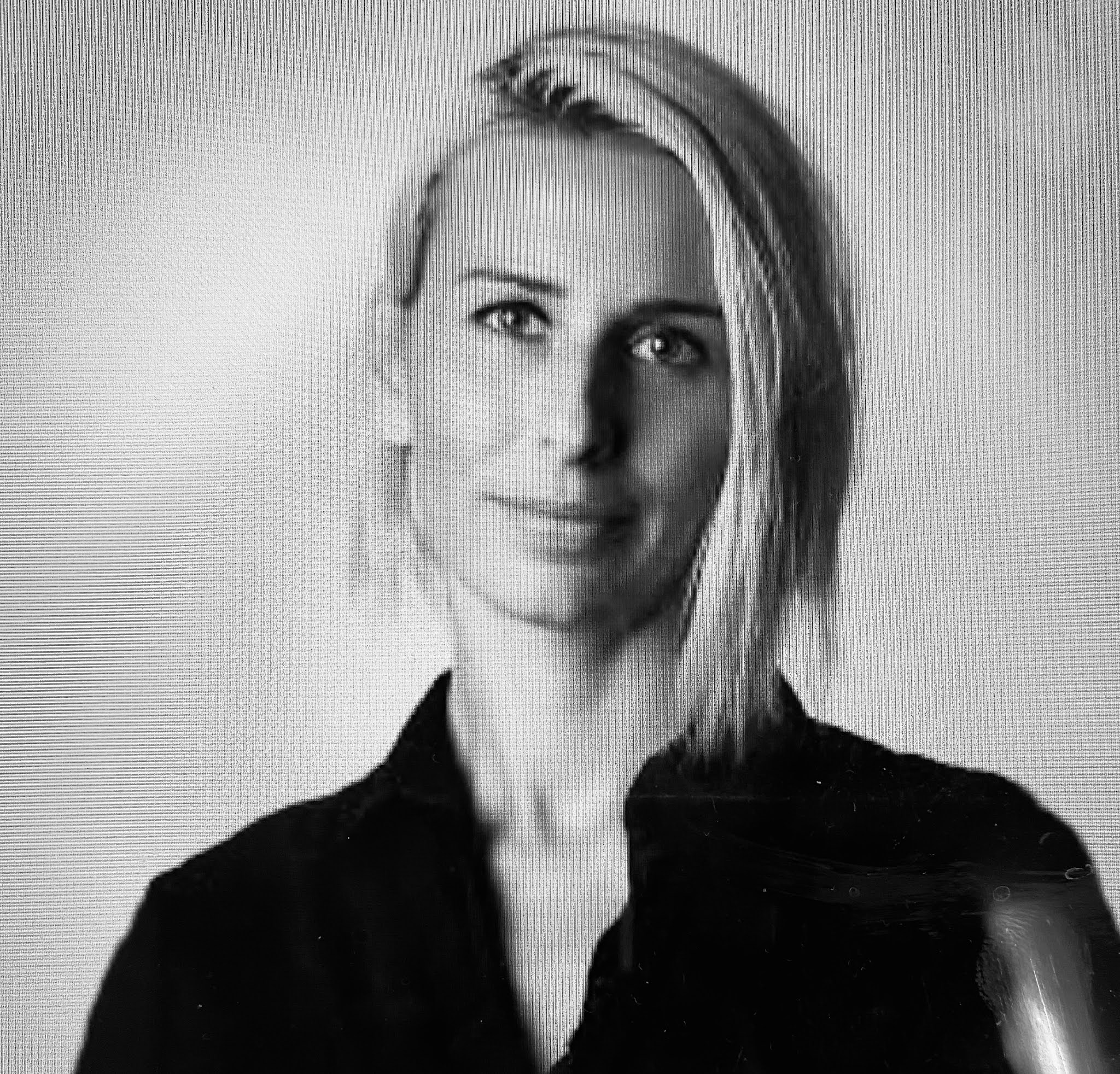

Bio: Sevcan Aytaç Sönmez was born in Turkey in 1983. She lives and works in İzmir. She is an academic at Yaşar University at Art and Design Faculty, Film Design Department. Her articles were published in national and international journals. Her first book Remembering Through the Movies was published from a well-known national publisher in Turkey. She has written book chapters, which were published nationally and internationally. A chapter entitled “Modernism, Memory and Cinema” was published in Film and Literary Modernism, edited by Robert McParland (Cambridge Scholars Publishing, 2013). The national book chapters are “Hard Times, 1990’s Turkish Cinema” in Reflections of Modernism, edited by Eric van Zührer and Funda Barbaros, in 2017. “We Are All in Blockade, Time and Style in the movie ‘Abluka’” in New Frames: Cinema in Turkey, edited by Serhat Serter, in 2017. She is one of the editors of a recent book entitled Women’s Camera, Women Directors After 2000s, 2019. Her academic study areas are cultural studies, gender issues, and urban studies. Apart from theoretical works, she is engaged with experimental filmmaking and video art. Her films were shown and awarded in various festivals.

The Forking Paths — Interactive Films: From Basic Interaction Models to Full Interactive Experience.

https://www.dailymotion.com/video/x82gpgb  (14‘) (password: paths)


Presenter: Bruno Mendes da Silva
Registration Number: 008
Institution: University of Algarve, Faro, Portugal
Abstract: Based on The Forking Paths project, this article aims to analyse the different models and levels of filmic interactivity. Through this analysis we seek indications for possible paths of evolution of the audiovisual language that, after the unavoidable contributions of authors like Griffith, Porter, Kuleshov, and Eisenstein, seems to have stagnated in time. Finally, we address the ultimate question: is there really interactivity between spectator and interactive film? The methodology used is based on "practice-based research": original research carried out in order to gain new knowledge through practice and the results of that practice (Candy, 2006; Candy & Edmonds, 2010). According to Candy, originality and contribution to knowledge can be demonstrated through creative outcomes, such as music, images or new media, that result in the cut of that research. The Centre for Research in Arts and Communication (CIAC) of the University of Algarve has been producing digital artifacts that promote the interconnection between arts and technologies, and a significant part of the products developed are the result of projects in the areas of interactive cinema (i.e. The Forking Paths [https://oscaminhosquesebifurcam.ciac.pt/en/]).
With the emergence of the film-application, the spectator has been gaining autonomy in the control and participation of the filmic narrative. However, despite the new interaction proposals being more and more technologically advanced, using sensors, virtual reality or other interfaces, the spectator is still confined to the pre-produced contents. In fact, we can only speak of true interaction when a reciprocal influence is effected in the communication process. Such interaction does not happen in any of the productions made up to the time of writing this proposal, limiting the viewers to certain insurmountable and predetermined choices. However, with the imminent possibility of the Fertile Model (a model whose process of interactivity between viewer and film enables the emergence of new contents that were not pre-defined a priori), the viewer gains creative powers that escape the control of the author, making concrete the idea of meta-author and providing a generation of unforeseen contents, the so-called contents of automatic creation. This will certainly be a break in the logical sequence of the brief history of interactive film, where film may become something it never was until now: a total interactive experience.


Bio: Bruno Mendes da Silva has a degree in Cinema and Video from School of Arts of Oporto (ESAP) (1995), and a postgraduate degree in Arts Management from Macao Institute of European Studies (IEEM) (1998). He received his PhD in Literature and Cinema in 2008 from the University of the Algarve (UALG), Portugal and his Post PhD in Interactive Cinema in 2016, also from UAlg. He is the Coordinator of Communication Sciences area at School of Education and Communication (ESEC) and the Director of the degree in Communication Sciences. He is the Vice coordinator of the Research Centre for Arts and Communication (CIAC). He was a TV Producer and Director from 1995 to 2000 at Teledifusão de Macau (TDM) and has been invited to International Art and Film Festivals such as Fresh (Thailand), Dokanema (Mozambique), Loop (Spain), Festival de la imagen (Colombia), Ecologias Digitales (Colombia), The Scrip Road Macau (China) and FILE (Brazil). He has participated in 18 scientific projects (as investigator-in-charge or research member) and is the author of several books, book chapters, and other scientific publications (over 70). It has several doctoral and master thesis orientations completed. He is the Director of the Journal Rotura -Communication Sciences and Arts. He has dedicated the last decade to the research of the relations between Communication, Art and Technology and won the Ceratonia Scientific Award.